
If you have noticed a leak, missing shingles, or water stains on your ceiling, the first question most homeowners in St. Matthews ask is a simple one: do I need a repair, or is it time for a full replacement? It seems like it should be an easy call, but the answer depends on several factors that are easy to overlook without a trained eye.
This guide walks through what separates a repair situation from a replacement situation, what questions to ask your contractor, and how to avoid spending money on the wrong option.
Why the Repair vs. Replacement Question Matters
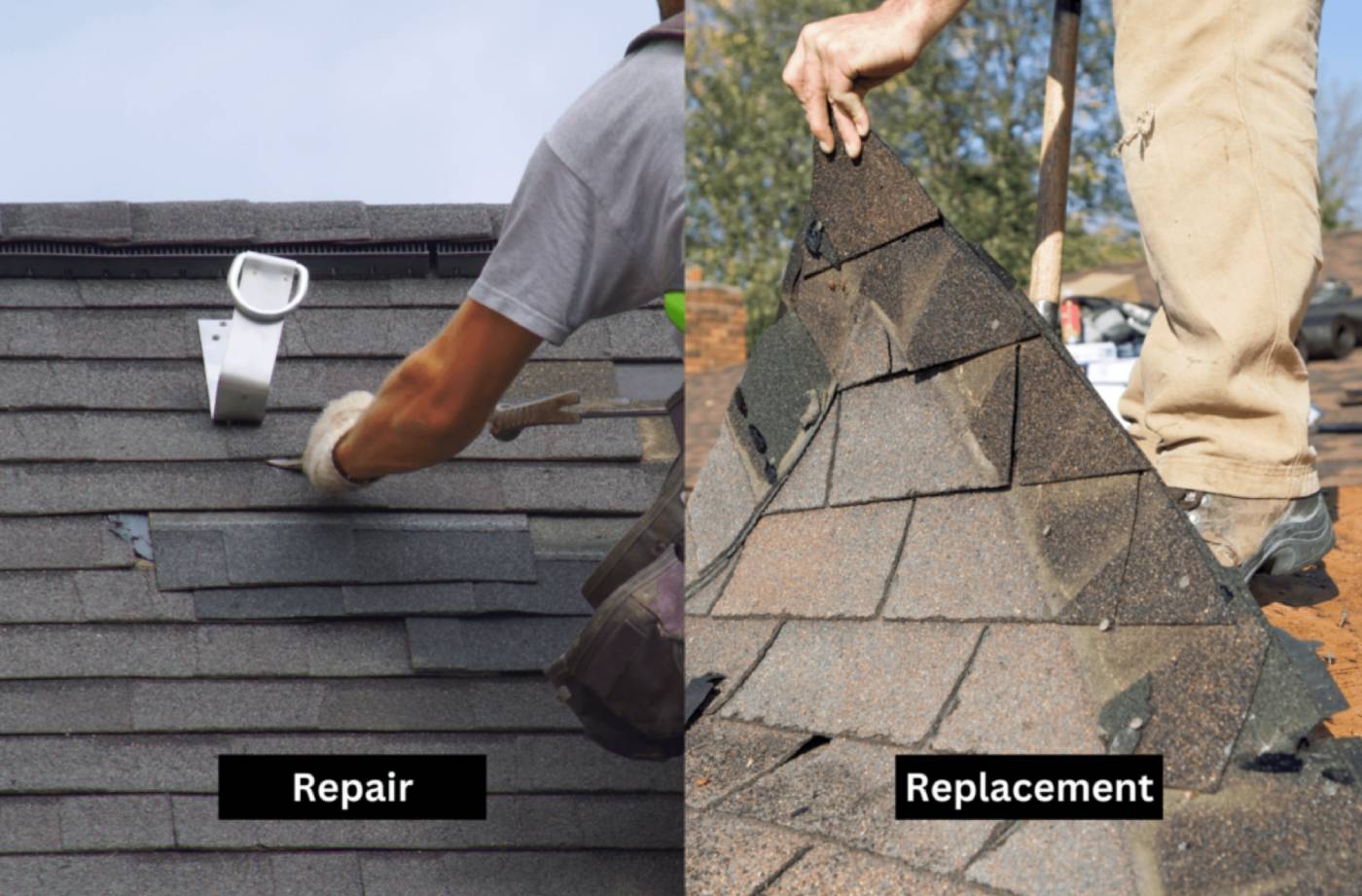
A roof repair that is performed on a roof that actually needs replacement is money spent twice. You pay for the repair now, and then pay for the full replacement in a year or two anyway, sometimes with added costs for the water damage that happened in between.
On the other hand, replacing a roof that only needed a targeted repair is a significant unnecessary expense. In St. Matthews and the surrounding Jefferson County area, a full roof replacement on a typical home runs several thousand dollars. If a few hundred dollars in repairs would have added five more years to your roof, jumping straight to replacement does not make financial sense.
Getting the decision right comes down to knowing what to look at and being honest about the overall condition of your roof, not just the one spot causing problems right now.
Factors That Point Toward Repair
In many cases, a repair is the right move. Here are the situations where it makes sense to fix what is broken rather than start over.
The damage is isolated to one area. If a storm blew off shingles in one section of your roof, or a small area of flashing has pulled away from your chimney, that is a targeted problem with a targeted fix. As long as the surrounding shingles and decking are in good shape, a repair handles it cleanly.
Your roof is less than 15 years old. Asphalt shingles are typically rated for 20 to 30 years depending on the product. If your roof is in the first half of its lifespan and the rest of it looks solid, repair is almost always the better investment.
The repair cost is well under 50 percent of replacement cost. This is a rough guideline, but it holds up. If a contractor quotes you a repair that costs less than half of what a replacement would run, and the rest of the roof is holding up, repair is likely the smarter choice.
No structural damage is present. If the decking underneath the shingles is dry, solid, and undamaged, the foundation of your roof is still sound. Repairs on top of good decking last.
Factors That Point Toward Replacement
Some situations make repair the wrong tool for the job. Here is when replacement is the better long-term move.
Your roof is approaching or past its expected lifespan. If your shingles are 20 years old or more, they are likely past the point where spot repairs hold up. Even if only one section looks bad, the granules on the rest of the roof are probably worn thin, and other problems are not far behind.
Widespread granule loss. Granules are the protective coating on asphalt shingles. They reflect UV rays and protect the asphalt underneath from the elements. When you find heavy granule buildup in your gutters or at the base of your downspouts throughout the entire roof, that is not a repair situation. The protection is gone across the board.
Multiple problem areas at once. If your contractor finds damage in three or four separate areas during an inspection, that is usually a sign that the roof has aged to the point where new problems will keep appearing. Patching one area while others deteriorate means you will be calling for repairs repeatedly.
Active leaks with unknown origins. When water is getting in but the source is hard to trace, that often means the underlayment or flashing system has failed in multiple places. These widespread failures are difficult to repair effectively and tend to come back.
Visible sagging or soft spots. Sagging sections of a roof indicate that the decking has taken on moisture and begun to rot. Once the structure itself is compromised, shingle replacement is only part of the fix. A full replacement gives you the chance to address the decking properly.
What a Good Inspection Tells You
The repair vs. replacement question is hard to answer accurately without getting on the roof. From the ground, a homeowner can spot missing shingles and obvious damage, but the more important details are invisible until someone physically inspects the surface, the flashing connections, the ridge line, and the attic space below.
A professional roof inspection gives you a clear picture of the full situation. A qualified contractor will document what they find, estimate how much useful life the roof has remaining, and give you a realistic cost comparison between repairing and replacing. That information makes the decision much easier, and it also gives you documentation for insurance purposes if storm damage is involved.
Do not skip this step. Guessing at a repair or replacement based on what you can see from the driveway is how homeowners end up making expensive mistakes.
The Age Plus Damage Test
A simple way to think through the decision yourself before calling a contractor is to combine two questions.
First, how old is the roof? If it is under 12 years old, lean toward repair unless the damage is severe. If it is 18 years or older, lean toward replacement unless the damage is very limited.
Second, how much of the roof is affected? If the damage is limited to one slope or one small section, repair is more likely the right call. If you are seeing problems across multiple areas or throughout the whole surface, replacement usually wins.
When both factors point in the same direction, the answer is fairly clear. When they conflict, for example, an older roof with minor damage in one spot, that is when a professional inspection becomes especially important.
What St. Matthews Homeowners Should Watch For
St. Matthews sits in Jefferson County, where spring and summer storms can be intense. Hail, high winds, and heavy rain are regular seasonal events, and they add up over time. Homeowners in this part of Louisville tend to see shingle wear and flashing problems develop faster than in drier climates simply because of the frequency of weather events throughout the year.
If your roof has been through several storm seasons without a professional look, that alone is reason to schedule an inspection. Catching wear early keeps repair costs low and pushes back the timeline for replacement.
Talk to a Contractor You Trust
The contractor you hire for either a repair or a replacement should be able to clearly explain why they are recommending one over the other. If a contractor immediately pushes for a full replacement without documenting the damage or walking you through the condition of the rest of the roof, that is worth questioning.
At Origin Roofing & Exteriors, we serve homeowners across St. Matthews and Jefferson County with honest assessments and written documentation. Whether the right answer is a targeted repair or a full replacement, we give you the information you need to make the call with confidence. Reach out to schedule a roof inspection and find out exactly where your roof stands.