

Severe weather is a regular part of life in Lyndon, KY. Living in Jefferson County means dealing with everything from hail-producing thunderstorms in the spring to high winds that roll through during summer storm season. Many homeowners are surprised to learn that even a single storm can leave behind damage that is not visible from the street, and small issues left alone often turn into leaks, mold, or full roof replacements within a few years.
The good news is that you do not need to climb on the roof to get a sense of whether your home has been affected. With a careful walk around your property and a few things to look for, you can identify warning signs early and call a professional before the damage spreads.
Why Lyndon Roofs Face Constant Pressure
Lyndon sits in an area of Kentucky that experiences a wide mix of weather throughout the year. Summer brings heavy rain, hail, and strong wind gusts. Winter introduces freeze-thaw cycles that expand small cracks in shingles and flashing. Spring and fall bring rapid temperature changes that wear down sealants and underlayment over time.
Asphalt shingles, the most common roofing material on homes in Jefferson County, are designed to handle this kind of stress, but they do wear out faster when storms are frequent. Roofs that are more than 10 years old are especially vulnerable, since the granules that protect the shingles begin to loosen with age. After a major storm, even newer roofs can lose protective material or develop hidden weak spots.
Signs of Hail Damage on Your Roof
Hail damage is one of the most common storm-related issues homeowners in Lyndon face, and it is also one of the easiest to miss. Hailstones do not always tear shingles apart in obvious ways. More often, they leave small bruises or pockmarks that compromise the shingle from the inside.
Here are the signs to look for:
- Dark spots or dimples on shingles. These look like small craters where the protective granules have been knocked loose. They are often the size of a coin and can appear randomly across the roof.
- Granules in your gutters or at the base of downspouts. A buildup of black or gray granules near your foundation is a clear sign that hail has stripped material from your shingles.
- Dents on metal flashing, vents, or gutters. If your metal surfaces show small dents, your shingles likely took similar impacts.
- Cracked or split shingles. Larger hailstones can crack shingles outright, exposing the underlayment to moisture.
Even if your roof looks fine from the ground, hail damage may still be present. A professional roof inspection from a trained eye is the only way to know for sure.
Signs of Wind Damage on Your Roof
Wind damage is often more visible than hail damage, but homeowners still tend to underestimate how much harm a single storm can do. Strong gusts can lift shingles, peel back flashing, and expose seams that are supposed to keep water out of your attic.
Watch for these warning signs:
- Missing shingles. Look for bare patches or shingles lying in your yard after a storm. Missing shingles expose the underlayment immediately and can lead to leaks during the next rain.
- Lifted or curled shingles. Wind can break the seal that holds shingles flat. Once that seal is broken, water can work its way underneath even if the shingle looks like it is in place.
- Damaged flashing. The metal strips around your chimney, vents, and skylights can bend, lift, or pull away during high winds. Damaged flashing is one of the most common sources of roof leaks.
- Debris on the roof. Tree limbs, branches, and other heavy debris can crack shingles or puncture the roof deck. Even small debris can wear down shingles if it sits there for weeks.
If you notice any of these signs, take photos for your records. They will be useful if you decide to file an insurance claim.
What to Do When You Spot Damage
The most important thing to do after spotting potential storm damage is to act quickly. Water that gets past a damaged shingle does not always show up as a ceiling leak right away. It can soak into the decking, run along rafters, and cause damage in places you cannot see for months.
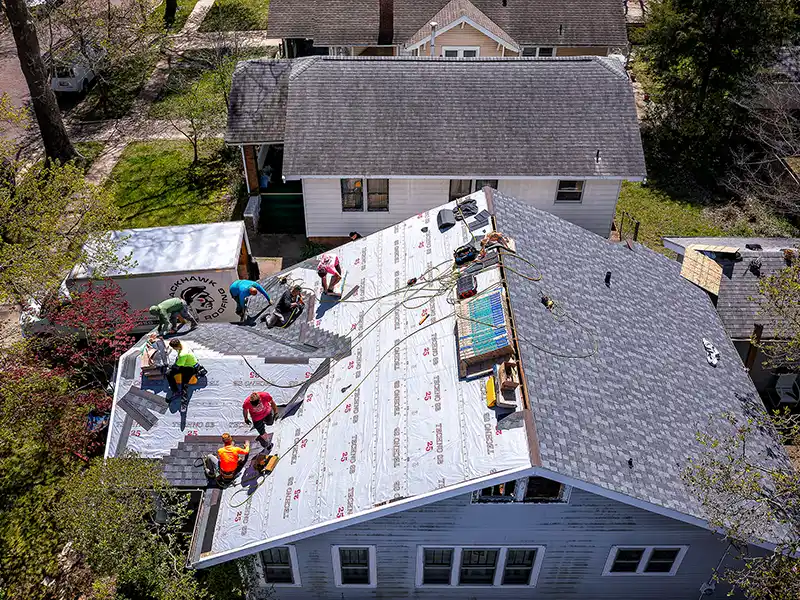
Start by documenting what you find. Take clear photos of any visible damage, both close up and from a distance. Note the date of the storm and any weather details you can remember. Then schedule a professional roof inspection. A qualified roofing contractor can climb safely, evaluate the full extent of the damage, and provide a written report you can use for insurance purposes.
If the damage looks severe, especially if you see exposed underlayment or active leaks, do not wait. Emergency roofing services can secure your home with a tarp and prevent additional water damage until permanent repairs are made.
Why Early Action Saves Money
Small roof issues are almost always cheaper to fix than large ones. A few cracked shingles repaired today might cost a few hundred dollars. The same damage left alone for a year can lead to rotted decking, ruined insulation, mold growth, and interior repairs that run into the thousands. Acting early also keeps insurance claims more straightforward, since most policies have time limits on storm-related damage reporting.
Get a Professional Inspection in Lyndon
If a storm has rolled through Lyndon recently, do not assume your roof is fine just because you cannot see damage from the ground. The team at Origin Roofing & Exteriors provides thorough roof inspections for homeowners across Jefferson County, including detailed reports you can use for insurance claims. Whether you need a quick check after a storm, urgent repairs, or a full roof replacement, our crew is here to help you protect your home before small problems become major ones.


